Tuesday, 28 May 2019

Monday, 29 April 2019
Manchester Punk (Poetry) Festival
I discovered punk and
poetry around the same time. John Cooper
Clarke’s scattergun verse is where the Venn diagram intersects. But I soon
discovered a scene of performance poetry beyond the Bard of Salford, and punk
music beyond the 1970s.
Mid-2000s I went to local
gigs to see local bands. And touring
bands like Random Hand and Sonic Boom Six became my favourite bands. And the more I wrote poems, the more the poetry
scene became a poetry community with nights, hubs and friendly pals in cities
across the UK. In 2015 me and Bridget
Hart toured the UK to poetry and punk venues, in 2018 my theatre company toured
our show about punk to theatre venues and DIY spaces. Seems JCC isn’t the only place where the Venn
diagram intersects.
I’ve done a few gigs with
punk bands, and when I used to put on music gigs I’d always get a poet to do a
set. Punk’s not always been about just
guitars. 80s gigs used to feature cabaret
acts, comedians, story-tellers and all kinds of spoken word artists such as
Joolz Deby, Attila The Stockbroker, Porky The Poet (aka Phil Jupitus) and Craig
Charles.
Manchester Punk Festival
are doing some really exciting and diverse work. Their festival is a passion project from a
consortium of gig promoters who showcase not just shouty punk, but
international bands, folk-punk, ska, indie-punk and queer and female
representation, and spaces for films, podcasts and ethical food. I like how they re-think how you manage a
large-scale festival, how you approach that structure in a DIY, non-profit
driven pro-inclusive model. They have
defined a brand which feels professional, but also DIY and inclusive. Last year they started a Comedy Stage, so I
approached them to see whether they would be interested in running a Poetry
Stage.
So after what seemed an
eternity of plotting and planning and play-list-making, my line-up for the
three days was born. Something I really
noticed at MPF over the weekend were bands really appreciating people coming to
support them. I guess normally punk
bands play in the small venues, so pooling everyone together can feel an epic
gig. Kermes played a gloriously sweaty
fun set, Whoanows were charmingly fresh, Nervus celebratory, Cherym a fistful
of fury, Martha stormed through banger-after-banger-after-banger Perkie was
intimate and soulful to name but a few.

And it got me thinking
about punk and punk poetry. Poets often
play to smaller crowds, and often present more personal and individual
work. Bridget Hart’s Saturday set was a
loveletter to the people in her life.
Martin Appleby told little stories and insights of the scene. Suky Goodfellow directly interacted with her
audience in a Choose Your Own Adventure-style poetry set. Cynthia Rodriguez took the mic out into the
space for her anti-borders banter. Kit
Rayne showed a slice of her tattooed nerdy queer heart. Simon Widdop juggled stories of home. Genevieve Walsh was in her natural environment
of back-room pub pal-packed poetry. People
hopped up for the open mic.

And I? I was the first person to perform at Manchester
Punk Festival in slippers. Because if I
can’t have comfy feet, it’s not my revolution.
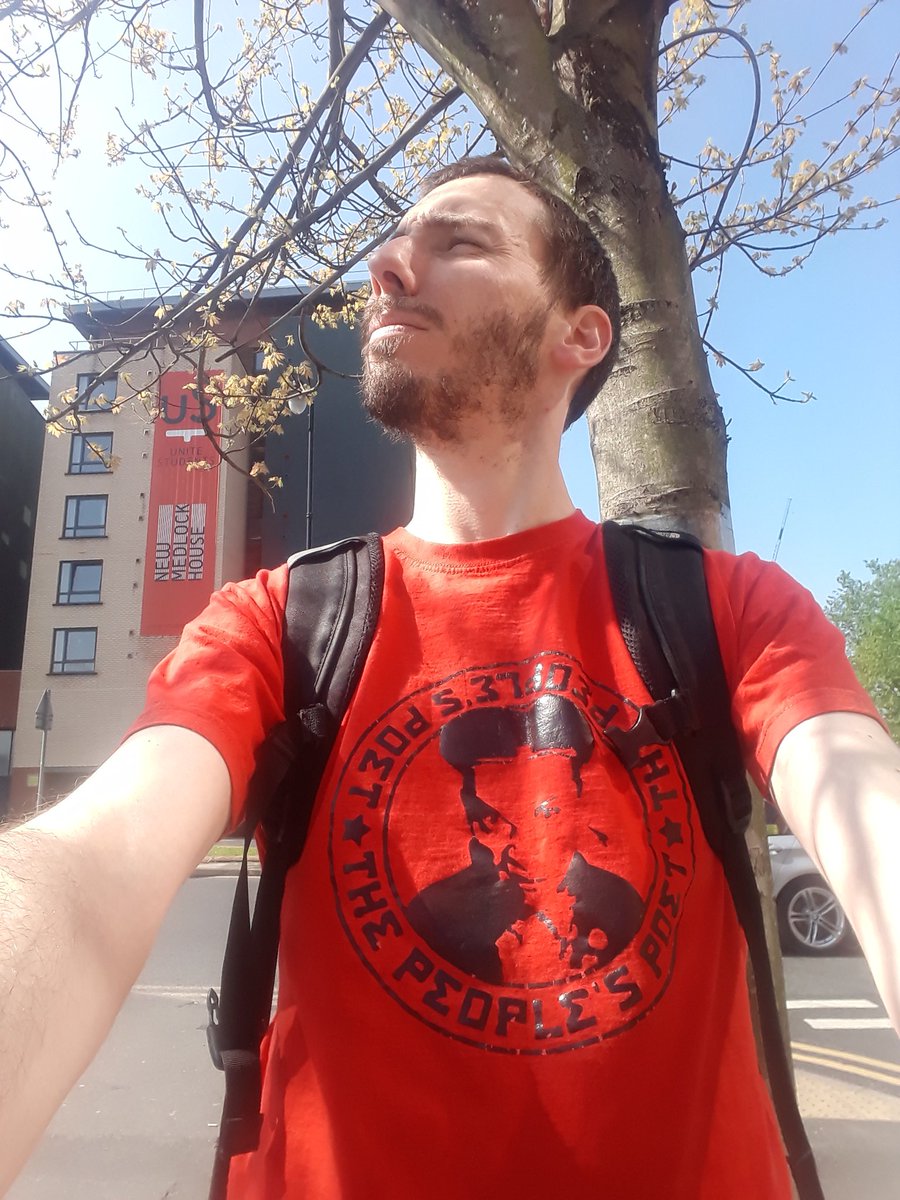
Punk tried to tear down
that barrier between audience and performer.
No rock star pomp, we are you, you are us, get a guitar, make a zine,
write a poem and join in.
We want that connection
with the performer and audience.
The last act I saw at the
festival was Perkie. She played a song
called Werewolves which I’d never heard before.
She said it was about this punk community. I had a little cry.
Punk should be more than
just music; it’s a culture, which includes Comedy and Poetry (and film
too!). I’m glad that poetry could be
part of the DNA of the Festival. Up The
Poetry Punks!
Monday, 8 April 2019
Three NaPoWriMo poems
NaPoWriMo is the national poetry-writing month.
Participants try and write a poem-a-day.
I had some busy days (and some naff days) so have managed three new poems so far.
All untitled, all fresh, all need work, all here in this blog
Participants try and write a poem-a-day.
I had some busy days (and some naff days) so have managed three new poems so far.
All untitled, all fresh, all need work, all here in this blog
Motorway stretches thinly onwards into darkness
Repetition like black and white cartoon loop.
Just point the wheels in the right direction
Keep my foot where it belongs
And count down the seconds.
Across the country
Packages and parcels and produce
Totalled and transported.
Ambulances ignite and illuminate streets
A bleak blue.
Late-working lovers return, party-goers get going
Sleepy key-fumbling.
I trust in the deep red speakers on the passenger seat
Dispatch carefully curated podcasts and playlists.
The world breathes past at 70 miles per hour.
The Google Maps app ticks.
How did it get so late,
And who is over-taking me?
To get to either of my jobs
Or the centre of town in general
I walk past a Model Shop.
I’ve been in this shop
Plenty of times for brushes
And paints and flocks.
But I’ll admit, these many times
Were many years ago.
It’s unchanged in stock
Presenting twee railway
In 1.76 gauge.
Window-rammed with
Cars and toy soldiers
Measured in millimeters.
Glued-up Spitfires and Bombers
Drone above plastic fields of
railways and trains.
Scenes affixed from
Memories of Britain
In Penguin books.
A reminder of consistency
In hobbycraft and
Nostalgic pursuits.
Seems so English
(or British)
Like bowlers and suits.
As I often dash
Late for a shift
Or stride home
Post-work
I try and snatch
A new fact from the window.
A new name or detail
Colour or brand
As an excuse to keep my
Phone in my pocket.
I have faith.
I have faith that when I press the traffic light button, it will work.
The red ring will illuminate, or the WAIT decree will shine.
The municipal system will be enacted, Green becomes Yellow
And when the Red light halts wheels, Green Men invite
And we will cross the road safely, you and I.
Trust me.
Have you no faith
That I pressed the button?
Have you no faith
That the uppercase WAIT assurance shows
That the request works?
Have you no faith
So you must press the button as well, add nothing
Waste your finger?
Have faith.
I pressed the button.
The traffic crossing is working.
Thursday, 28 March 2019
The Angels, the Vandals and the Greysteels
Last week myself and Natalie Quatermass were in Sheffield
all week being mentored by Third Angel.
Me and Nat are Vandal Factory Theatre Company and, after our first show
last year, are developing a new play called English Dirt
A line from our last show kept buzzing around our brains.
“Who owns the roof
that you live and eat and work beneath
Is it fear of
starvation that makes you believe what you believe?”
This has led us down an English country road of
land-ownership, which naturally leads us to question the enclosure laws, power dynamics,
nationhood, borders, the State and identity.
With the constant question of sovereignty and Britishness being dragged
into discussions across Parliament, the media and pubs our show, English Dirt,
set about exploring this theme.
The last year has seen us cover floors with Big Sheets Of
Paper and read articles, books and zines around our topics. It feels like we started this conversation
back in 1066, but we’re finally making progress.
I’ve interacted with Third Angel a few times over the
years, once at a workshop at York Theatre Royal, speaking at their conference a
few years back and generally seeing their productions. Their co-Artistic Director Alex is a superb
mentor who helped us whittle away at some ideas, find connecting themes and
narratives and gave us support to find the next stages of our route.

We also worked with band Flora Greysteel, a joyous
duo. We felt our history of land laws
should relate to the history of British protest, and Simon and Emily are dazzling
in their ability to take the slither of a song or attitude and transform it
into spectacular music seemingly in seconds.
I think this last week has taught me a lot about shifting
through ideas. We kept referring to the
idea the statue is inside the block of clay already, the sculptor’s job is to
excavate it. We are finding out show,
piece by piece, among this vast and important history and story. If we are wandering down a road, we have
thrown away some of the baggage, but also seen new sights along the way.
We also managed to see Standing At The Sky’s Edge at
Sheffield Theatre, a show with similar themes about ownership, class and identity
in modern Britain.
I wanted to document this week and say thanks to Third
Angel and Sheffield Theatres, a big warm hug-filled thanks to Flora Greysteel
and my collaborator Natalie Quatermass.
I am excited for the next stage of English Dirt’s muddy road!
Sunday, 27 January 2019
Poetry sales soar = Poetry gigs soar
Last
night I attended one of the best poetry gigs I’ve ever been to. And I get
the impression not a single poetry book was sold.
At
Salford’s The Eagle Inn, whilst BBC Radio 6 celebs supped in the front, the
back room played host to Word War’s Champions of Champions Slam where 10 of
their previous winners and runners-up each shared two poems (3 mins max).
Hosted
and organised by super team Kieren King and Ella Gainsborough, the night was a
diverse and raucous affair, with a mixture of warm story-telling, intense
politics, surreal stand-up poetry and personal truths. There were
tears. Though, as far as I could tell,
the only slammer with a book to plug was the heartfelt writer Ciaran Hodgers (guest
at the next Say Owt Slam).


The
Guardian recently ran an article declaring POETRY
SALES SOAR. Pretty good news after their 2013 article POETRY
SALES PLUMMET. Their 2019 article says this is down to 1.
Millennials and 2. the need for collective understanding after critical
events such as the Manchester bombing and Grenfell.
Certainly
it’s true Millennials are drawn to the spoken word mantle after growing up on a
diet of mainstream hip-hop and New Labour education systems that featured
Benjamin Zephaniah and John Agard. Of course our click/share biteszie
culture doesn’t hurt. Spoken word
(especially the 3 min slam format) appeals to our Millennial need for an
immediate, digetable experience. But
that’s not to say members of Gen X and BabyBoomers are making exciting and
relevant poetry, a testament to the scene’s reach.
In
terms of a collective sharing, at Word War’s CoC, Kieran King shared his poem Salford
Is A Broadway Musical, a beautiful lovesong to his hometown. The
audience joined in with thick gusto, making this no longer a simple poem but a
electric sharing, an outpouring of communal love and a bloody good laugh
celebrating home and the scene.


I
recently toured the UK with my book, Nerd
Punk, published by Burning Eye.
I work with Say Owt and we focus on the performance of poetry and the
liveness, but nevertheless Inua Ellams, Hollie NcNish, Rob Auton, Jemima
Foxtrot, Jess Green and the aforementioned Ciaran Hodgers all part of Say
Owt’s programming have books for sale. These poets (well,
maybe expect Hollie), don’t tend to sell books by the bucketload.but more as
mementos to remember the live event, to revisit the words presented by the
poet.
Yes,
poetry sales might be up but that’s because audiences (and especially
millennials) spend time and energy and money on experiences. The books
bought are a way to help capture when you cheered, laughed, cried and shared.
Friday, 14 December 2018
A people's history in poetry
Last week I had the
pleasure of guesting at Poetry Jam up in Durham run by Steve Urwin.
The North East is a lovely
vibrant community, it feels like one big regional village of Newcastle,
Sunderland Durham and Stockton where faces pop up across the poetry events.
I was struck by a shared
love for stories at the night. Rich, warm, generous and personable, a
good number of the open miccers told their tales through verse. Sometimes
poetry scenes get known for a particular form, some nights love stand-up comedy
poetry, others enjoy right-on political poetry.
It’s no surprise, the
North East has a special history of working class folk music and shanties, Alex
Glasgow being a particular favourite of mine.
The other guests were the
wonderful Ellen Moran and Tom Kelly. Tom’s career has spawned eleven
books of poetry, stories and plays, a real veteran of the scene. Ellen,
by contrast, started performing poetry this year. Nevertheless she was one of
the most confident and fierce performers I have seen for a long time.
A notable connection
between these two poets was their use of characters and stories. Ellen
shared a poem about her Great Aunt, Peggy, and the rehousing of the working
class of the 1960s. Tom shared a poem about a family photo, and also
stories of Jarrow. A poem that really
struck with me told the story of William Jobling, a striking miner and one of
the last to be hung by a gibbet in Britain.
I have been researching a
lot of British history lately. The Peasants Revolt of 1381, anti-fascism
in the 1930s, the Land Laws and enclosure of the 1700s and the Diggers,
Levellers, Luddites and Blanketeers that pepper our history. The working
class struggle often ignored in favour of the story of Kings and Queens and
their wars.
Some of my favourite poets
are story-tellers. They paint a picture with language of place, people
and time. And through that story we can write our own. Ellen works for the Union Acorn, supporting
tenants and tackling housing injustice.

I feel connected to a
people's history, not because of some shared language, ethnicity, race or
religion as Nationalists would unite us, but through a struggle against the
rich, the bosses, the managers, the powerful and those that would divide us,
erase our stories and enforce their own.
Wednesday, 12 December 2018
We want our scene to be magnetic
Poetry scenes become
poetry communities. Because attendees are not necessarily housemates,
family or work colleagues, these communities thrive as refreshing spaces to see
people once or twice a month in a context for sharing art. They come from
a range of ages and backgrounds, and familiarity of people's poems is a
cornerstone of friendship. You can also
make new pals by complimenting someone's poem, a handy conversation-starter.
However whenever a
community starts to emerge, we humans also create hierarchies in the form of
references, in-jokes and expectations. Cliques can start to creep, we
request classic poems, we shout-out things perhaps understood by the minority
in the room, we chat about people, places and events from within.
In a recent review, A Dork In York blog
praised Say Owt's recent collaboration with Sonnet Youth and it’s a glowing
write-up. I'm Artistic Director for Say Owt, and hugely proud of this
night where we mixed poetry, comedy and music.
However the reviewer does
point out “slam poetry has a reputation for being too cool for a reason, and I
think that Say Owt could bear that in mind … When the hosts (I’m excluding
Sonnet Youth from this – y’all were a joy) are all sat with their mates
whooping and bantering on one side of the pub and the audience is on the other,
it can feel at times like you’ve wandered into a private poetry party.”
Say Owt’s vibe can, at
times, became a little bit raucous because we want the spoken word genre to be
excitable and energetic. We have developed an in-joke of acting slightly
rowdy, coming up with chants for poets, subverting the expectations of usually
quiet, introspective poets. Because Sonnet Youth were taking over hosting
duties, possibly I wanted to be a high-energy audience member, after all that’
the vibe Sonnet Youth as a “literary rave”.
I can only profusely
apologise if any audience member, or poet, has ever felt alienated at our
events. We always try to greet and welcome poets to events we are
hosting, and in terms of audience members try and ensure we’re all on the same
wavelength, sharing a unified vibe.
We want our scene to be
magnetic.
Coming to any event,
especially if you’re considering sharing poetry, can be a daunting experience,
and I can see how someone turning up not knowing us might be uncomfortable with
toying with a banter-ful vibe. I certainly know if I’d turned up to a gig
when I was starting out and not felt comfortable in that community, I would not
have returned.
If anyone has suggestions
how nights can dispel cliques and ensure it is a open environment, please
comment below or send us a message info@sayowt.co.uk.

Subscribe to:
Posts (Atom)