Showing posts with label DIY. Show all posts

Thursday, 8 April 2021

Thatcher and Music Part 1: Get Rid Of Maggie

Thatcher and Music Part 1: Get Rid Of Maggie

Over 2020 and into 2021, I’ve been working on a book about protest music of the 2010s against austerity, and you can read extracts here. Part of this has made me look to the past and the protest music of the 1980s. As this week seems the anniversary of Thatcher’s death, here’s an edited extract:

On April 8th 2013, Baroness Thatcher passed away. Few other 20th century British figures have spearheaded such societal changes as Thatcher, and caused so much harm through destructive policies. Thatcherism's upheaval of the welfare state, demonisation and breaking of working class communities, de-regulation of the markets created a polarised and unrepentant response from musicians. You can find a Spotify plealist here.

Thatcher is overtly the subject of songs by The Beat (‘Stand Down Margaret’), Macka B (‘Get Rid Of Maggie’), Ewan McColl (‘The Grocer’), Morrissey (‘Margaret on the Guillotine’), UB40 (‘Madame Medusa’) and The Exploited (‘Maggie’) to name but a few. Her figure looms across the music of the era, Sinéad O’Connor’s ‘Black Boys on Mopeds’ opens with the line “Margaret Thatcher on TV”, whilst Pink Floyd refer to “Maggie” multiple times throughout their 1983 album The Final Cut.

In 1985, The Men They Couldn’t Hang released ‘Ironmasters’, which reached number 11 in the UK singles charts. Their record label insisted the release remove the line "and oh, that iron bastard, she still gets her way," a knowing reference to Thatcher as the Iron Lady. The Blow Monkeys’ 1987 album was dedicated to Thatcher, titled She Was Only a Grocer's Daughter and featured jibing songs like ‘The Grantham Grizzler’. Though intended as a protest against her, Thatcher was always proud of her middle class origins. During the election, the Blow Monkeys released a blue-eyed soul duet with Curtis Mayfield called ‘(Celebrate) The Day After You’, which was too political for the BBC to play during a general election and was banned. Crass’ 1982 anti-war single ‘How Does It Feel’ asked Thatcher “How does it feel to be the mother of a thousand dead?” Tory MP Timothy Eggar blustered on LBC Radio that the song went “beyond the acceptable bounds of freedom of speech, being the most vicious, scurrilous and obscene record that has ever been produced.” I guess by modern standards, he wanted to ‘cancel’ Crass.

‘Maggie Maggie Maggie / Out Out Out' was a familiar chant throughout the decade, and immortalised in song by The Larks, which was played by John Peel on his roadshows. On the sleeve notes to their 1986 debut album, The Communards dedicated their song ‘Reprise’ to Thatcher. ‘She’ll Have To Go’ by pop chart-toppers Simply Red declares “breaking our backs with slurs / And taking our tax for murdering / The only thing I know / She’ll have to go.” Elvis Costello goes further: on his cutting ‘Tramp The Dirt Down’, he hopes he’ll live on so that “when they finally put you in the ground / I'll stand on your grave and tramp the dirt down.”

Various bands, artists and comedians were part of Red Wedge, a collective hosting gigs and events from 1985-1990, primarily to oust the Tories in the 1987 election (pictured above). Author and radio presenter Stuart Maconie says that Thatcher‘s personality was encapsulated in the ideology Thatcherism, like Reagan’s Reaganomics. No one ever called it Nixonomics or Callahanism. So Thatcher “became more than just a person, she became sort of a shorthand for the ruthlessness, callousness, the disregard for working people.” Speaking to website NPR the week of her death, Maconie goes on to to say:

"It wasn't just a political response; it was a kind of gut emotional response. In the north of England, the effects of Thatcherism were quite visible: Factories closed down, mills closed down, mines closed down, and people were put out of work. And of course, you've got to argue, she was an easy person to become a figurehead. She even looked like she should be on the prow of a ship."

Since the rumbling of alternative pop music since the late 1950s, a tribal and scene-based culture had been brewing across the generations. Just look at The Young Ones, where a metalhead, a punk and a hippie squabble. Retrospect films and TV like This Is England show the power of subcultures defining themselves, and being defined by their music. Tracey Thorn of Marine Girls and Everything But The Girl wrote in her memoir: “politicisation seemed to be the norm, and would continue to do so well into the 1980s. Even as musical styles changed, and many of the old punk battles were left behind, for those of my age the ideals of the late 1970s remained a driving force.”

By the 1980s, a cultivation of colourful and vibrant network of punk, synth-pop, dub, post-punk, new wave, Oi!, power pop, goth, metal, psychobilly, ska genres danced alongside fashion styles and cultures like New Romantics, Mod and Ted revivalists, skinheads, casuals, rude boys and the adjacent LGBTQ+ scenes and the Rastafarian religious and cultural movement. With such a packed repertoire of scenes and styles challenging mainstream perceptions, this period of time was rife for an explosion of political music.

Thatcher was eventually defeated when the Poll Tax legislation was met with riots and resistance. Over 40 people collaborated on Punk Aide’s 1989 compilations Axe The Tax, Can’t Pay Won’t Pay and Fuck The Poll Tax. Oi Polloi and Chumbawamba released and toured an EP called Smash the Poll Tax. Crossover thrash punks The Exploited released ‘Don’t Pay the Poll Tax’ in 1990, featuring clips from news reports on the Poll Tax Riots that same year.

Thatcher and her government became the focal intersection for these movements. Whilst bands and their fans come through different routes, they find themselves arriving at the same destination. For example, Madness and The Specials criticise the Tories on ‘Blue Skinned Beast’ and ‘Maggie’s Farm’ respectively, inspired by the upstart rude boy style of Jamacian ska. Meanwhile Scottish band The Corries are part of a legacy of rebellious celtic working class folk music. But whatever the roots of the struggle, these genres, styles and cultural communities all found a common enemy in Thatcher.

Ed Vaizey, Conservative MP between 2005 to 2019, said: “It’s become a cliché, but Thatcher was one of those Marmite figures – you either loved her or you hated her. Even those who hated her had to acknowledge that she was an iconic figure, and as such she became a lightning rod for dissent.”

This unity against Thatcher was a reflection of her own, sweeping antagonism towards British culture. Her biographer John Campbell wrote: “to fuel the aggression that drove her career she had to find new antagonists all the time to be successively demonised, confronted and defeated… She viewed the world through Manichaean spectacles as a battleground of opposed forces - good and evil, freedom and tyranny, us against them.”

And this is exactly the energy that is being invoked right back at Thatcher. These are songs which hold no punches. They are often bitter and brash, cutting straight to the point and using personal insults as a way to attack the broader policies and structures of Thatcherism. Speaking to author and journalist Dorian Lynsky, Crass’ Penny Rimbaud said: "I think Thatcher was an absolute fairy godmother. Christ, you're an anarchist band trying to complain about the workings of capitalist society and you get someone like Thatcher. What a joy!"

Tuesday, 27 August 2019

Apps & Austerity attack at an arts affair

Another year, another August, another Edinburgh Fringe adventure!  This year I took another solo show up with PBH Free Fringe:  Apps & Austerity.  A blow-by-blow examination of the last 10 years.  Defining the 2010s and it's memes and movements.

As my book came out last year, I wanted to find a good excuse to start writing a new set of poems.  Having the whole of the decade was a pretty good pool of source material!  But it was also a chance for me to move away from the more nerdy material I've been writing.  Put more distance between the cartoony/comic booky influences and try to not only dig deeper into the wider world, but dig deeper into myself and find Henry 2.0.

Certainly the show was very well-received.  After 5 years of performing on the Free Fringe, I can tell when an audience haven't clicked or connected with the show.  Usually because they put 50p in the donations bucket at the end.  But this year I had much more audiences leaving, irregardless of the wright of their wallets, saying they enjoyed the show.


I think the poems in Apps & Austerity were written much more with a wider 50 minute performance in mind, and so I tried to seed ideas, references and lines throughout the piece which meant there were more connections for the audience to fuse together.

I'm hoping to re-tune the show and take out to a few venues, if anyone is interested in the show drop me an email henry@henryraby.com

I found this year a lot harder than past years, despite being proud of the show.  I think this is because flyering never gets easier, and yet it's the only way on such a DIY level we can find audiences.  You just have to pitch the show every time the flyer leaves your hand. 

I don't think I took the time to properly self-care, which for me means waking, escaping the Fringe, eating somewhere away from the crowds.  I had later nights, which were with amazing pals, but potentially took their toll.  EdFringe is no easy feat.

One thing I also noticed was, as we move towards an increasingly cashless society, people apologised for not having any money for my bucket.  Something I know some artists rectified with a cardless cash machine, and something we need to think about if we're asking for donations and most people just use contactless in the future.

I want to give a huge thanks and shout-out to everyone on the PBH Free Fringe and the scene beyond.  The poets and spoken word artists who offer so much love, solidarity and support.  Who give a hand flyering, point audiences in the right direction, advertise at the end of their own shows and generally offer compassion and company.

Thank you so much xxx
I am so proud to know you all and hear you say words and have you hear mine.


Friday, 28 June 2019

Big Gigs

On Thursday, Say Owt put on the biggest gig of our 4.75 years of existence.  The previous 120 capacity record has been defeated by 200 people at The Crescent to see Hollie McNish.

Weirdly, in the weeks run up to this gig, I did the least amount of work I’d ever done for a gig.  The event had sold out, so no need to promote.  The venue got everything sorted and just needed to provide a mic. Compared to previous events where we fought for every ticket sale, needed to source chairs, equipment, organise the venue, this was all a straight-forward.  We did record a podcast with Hollie, which you can hear here!

I don’t mean to say this was an easy gig, but it did feel all the previous harder work and harder input was paying off with a comparatively easier event.

But what really struck me about the gig was how Hollie, with such a large fanbase, brought so many new people to a Say Owt gig.  I always ask for a cheer if the crowd have been to a Say Owt gig before, a cheer if new and the response is nothing short of edge-of-your-seat keen!  Certainly got a good block noise from newcomers!

With my business hat on, it’s a great opportunity to promote to new audiences to come to our smaller gigs (like this one plug plug!). But it’s also so valuable to feel part of a growing scene, where a night out watching poetry and spoken word is the same as a music gig, comedian or piece of theatre.  Maybe even one day we’ll have the same tribal bulk as football?

But what matters to me most is that we are bringing new people to the genre, and providing a platform not just for performers, for audiences to feel part of a scene and an inclusive artform.  Whether a gig has 20 people in a pub backroom, or 200 people at a big gig venue, as long as the gig is inclusive, passionate, honest and quality than we (as promoters & hosts) are doing a good job.

One person on Instagram said “First poetry gig I’ve been to, and absolutely loved it!  Thank you.  You were all amazing!”

Thank you everyone for coming, and Hollie for being rad!!!


Monday, 29 April 2019

Manchester Punk (Poetry) Festival


I discovered punk and poetry around the same time.  John Cooper Clarke’s scattergun verse is where the Venn diagram intersects. But I soon discovered a scene of performance poetry beyond the Bard of Salford, and punk music beyond the 1970s.

Mid-2000s I went to local gigs to see local bands.  And touring bands like Random Hand and Sonic Boom Six became my favourite bands.  And the more I wrote poems, the more the poetry scene became a poetry community with nights, hubs and friendly pals in cities across the UK.  In 2015 me and Bridget Hart toured the UK to poetry and punk venues, in 2018 my theatre company toured our show about punk to theatre venues and DIY spaces.  Seems JCC isn’t the only place where the Venn diagram intersects.

I’ve done a few gigs with punk bands, and when I used to put on music gigs I’d always get a poet to do a set.  Punk’s not always been about just guitars.  80s gigs used to feature cabaret acts, comedians, story-tellers and all kinds of spoken word artists such as Joolz Deby, Attila The Stockbroker, Porky The Poet (aka Phil Jupitus) and Craig Charles.

Manchester Punk Festival are doing some really exciting and diverse work.  Their festival is a passion project from a consortium of gig promoters who showcase not just shouty punk, but international bands, folk-punk, ska, indie-punk and queer and female representation, and spaces for films, podcasts and ethical food.  I like how they re-think how you manage a large-scale festival, how you approach that structure in a DIY, non-profit driven pro-inclusive model.  They have defined a brand which feels professional, but also DIY and inclusive.  Last year they started a Comedy Stage, so I approached them to see whether they would be interested in running a Poetry Stage.

So after what seemed an eternity of plotting and planning and play-list-making, my line-up for the three days was born.  Something I really noticed at MPF over the weekend were bands really appreciating people coming to support them.  I guess normally punk bands play in the small venues, so pooling everyone together can feel an epic gig.  Kermes played a gloriously sweaty fun set, Whoanows were charmingly fresh, Nervus celebratory, Cherym a fistful of fury, Martha stormed through banger-after-banger-after-banger Perkie was intimate and soulful to name but a few.


And it got me thinking about punk and punk poetry.  Poets often play to smaller crowds, and often present more personal and individual work.  Bridget Hart’s Saturday set was a loveletter to the people in her life.  Martin Appleby told little stories and insights of the scene.  Suky Goodfellow directly interacted with her audience in a Choose Your Own Adventure-style poetry set.  Cynthia Rodriguez took the mic out into the space for her anti-borders banter.  Kit Rayne showed a slice of her tattooed nerdy queer heart.  Simon Widdop juggled stories of home.  Genevieve Walsh was in her natural environment of back-room pub pal-packed poetry.  People hopped up for the open mic.


And I?  I was the first person to perform at Manchester Punk Festival in slippers.  Because if I can’t have comfy feet, it’s not my revolution.


Punk tried to tear down that barrier between audience and performer.  No rock star pomp, we are you, you are us, get a guitar, make a zine, write a poem and join in.

We want that connection with the performer and audience.

The last act I saw at the festival was Perkie.  She played a song called Werewolves which I’d never heard before.  She said it was about this punk community.  I had a little cry.


Punk should be more than just music; it’s a culture, which includes Comedy and Poetry (and film too!).  I’m glad that poetry could be part of the DNA of the Festival.  Up The Poetry Punks!


Saturday, 26 May 2018

I Am A Poseur And I Don't Care: Punk & Confidence part 2

I am a poseur and I don't care
I like to make people stare ♪
- I Am A Poser, X-Ray Spex

Someone recently suggested to me that, presumably, I don’t dress as a punk for ‘aesthetic reasons’.

I was wearing my trousers covered in band patches and my hoodie covered in band patches (and an Adventure Time patch).


I’ve always felt like my love for wearing band t-shirts and patches of bands was to turn myself into something of a cloth-billboard.  To represent and give a platform for the bands that I appreciated.  Iwrote a blog about it some three years past.

Clothes have always been an integral part of certain parts of punk.  The Ramones uniformity in their leather jackets helped further the myth they were all brothers, and helped stylised the ‘family’ aspect of their music, attracting the weirdoes, outsiders and misfits to their mutant pop.  Of course McLaran and Westwood using punk to plug their SEX wears is well-documented in the history of the Sex Pistols.  The Clash also enjoyed the sloganeering on their clothes.  And this style filtered into the scene, who donned the array of safety pins, piercings, spiky hair and ripped clothes which then rebounded back into the music when those fans became bands. 

The next wave of UK82 punk fitted the generic pattern of painted leather, Mohawks, piercings and patches.   So what you get is a circular pool of style that rotates round.  The style evolves as bands inspire fans who become bands to inspire fans.

There are bands that take their costumes to extended lengths.  Devo’s post-punk discordant music is the soundtrack to their bizarre boiler suit appearance.  Aquabats present as a super-hero squad, and the late great Frank Sidebottom playing all his gigs adorned with a gigantic head like a warped crown.  Famously the Dead Kennedys lampooned the music industry with ties and shirts that portrayed $ signs.  Nowadays bands like Yorkshire’s Snakerattlers and Nosebleed perform in Americana blues get-ups to reflect their musical sound.


There is also something interesting about a rejection of a costume.  The Undertones local lads look of jumpers, parkas and jeans reflected their simple, but beautifully effective, pop-punk.  This uncomplicated honest presentation seems the opposite end of the spectrum to the star-spanglyness of rock and prog bands of the late 70s.  No time for glitter, go to pop down the park for a kick about.

Onstage, punks costume can signify unity and camaraderie (The Specials, The Ramones) or a spiky hotchpotch of influences and personalities (Rancid, The Clash).  It can be a fierce don’t-fuck-with-me-ness using the body with unflinching agency (Bikini Kill, G.L.O.S.S.) or invoke other styles and ideas (Mischief Brew’s romantic troubadour visage).  And of course, that is echoed outside of gigs in the ‘real world’.

The look becomes part of the act, it becomes visual as well as aural.  It becomes a whole parcel of identity.

When I got into punk, I remember owned about 5 t-shirts I loved dearly for a good period of time.  I didn’t put any patches on anything, I had a leather jacket and my love for the Ramones and desire to keep something clean and pure (like books) meant I didn’t want to paint it.

Eventually I went through a good few years really enjoying customising my clothes.  I have a hoody devoted to queer and feminist bands (adapted from an Against Me! Hoody).  I have a ‘nerd punk’ hoody, and folk-punk trousers.  Just like my love for exploring genre and eras, I do like defining my clothes.

The confidence of this look comes from championing these bands (and politics).  There’s a confidence that the Petrol Girls patch and Clash t-shirt and Sonic Boom Six hoody mean that the music has your back.  Quite literally, it’s on your back.

Though I’m very fortune and privileged to have never been verbally or physically assaulted, I do feel like my clothes attract attention.  I want this to be positive, as people clock some bands to check out.  But, of course, this attention can also be negative.  Let’s never forget the tragic death of Sophie Lancaster in 2007.

These days, punk fans tend to stick simply jeans and a t-shirt.  There’s other aspects, beards and converse, but it’s often simple a sea of black with the odd colourful logo at the centre of your stitching.


There’s a layer of scorn in the punk scene if you don’t dress as a punk outside of a punk/gig context.  As if you’re not maintaining the belief, the scene, the style.  You’ll only wear your heart on your sleeve when your heart’s in it.  But I like the relief of not always being in a turning-heads Punk Mode.  A privilege not everybody has, but one I do exploit when I want to be ‘unpunk’.


There’s a toxicity to fashion, and we should always be wary of peer pressure to dress and present a certain way.  But sometimes I just like black jeans and a classic t-shirt and some anonymity.  Sometimes I like to be a watching quilt of bands.  And actually, that choice is empowering and gives me confidence I have options and not just an uninspiring narrow blueprint.


Monday, 14 May 2018

I Think That I Shouldn’t Be Allowed To Open My Mouth: Punk & Confidence Part 1

I Think That I Shouldn’t Be Allowed To Open My Mouth:  Punk & Confidence Part 1

I’ve felt conflicted and a lack of conviction/
I’d quit drinking but the beer makes me brave/
Here’s the half empty/
I’m always wrapped in thought my stomach tied in knots/
-Block Fort, The Half Empty https://blockfort.bandcamp.com/album/s-t

I’m going to try and write a series of blogs about the nature of confidence in punk.  The obvious arguments and the bizarre oxymorons.

OK, so let’s start with the obvious.  Punk bands own space. 

Whether it’s the sneer of Rotten, the sweaty leg-pumping of Strummer, the macho domination of Rollins or the jarring dance of Ian Curtis.  Whether it’s fiery don’t-fuck-with-me-ability of Kathleen Hanna, the cool-and-sharp-as-ice-ness of Debbie Harry or the gobby-bog-off-authority vibe of Poly Styrene.  Robin Leitch’s ska-spider scampering and Ren Aldridge’s almost back-snapping screech.

What drives this confidence?  In many cases, it’s the fact that out in The Real World, many singers don’t take up space and yet, here, they have a platform to be demanding, to be brutish; to be heard.  Punk is a way to be something you’re not in the real world.

Take Joey Ramone.  If you ever watch interviews, you’ll see he’s a shy guy, hiding behind his massive scuzz of hair.  Joey had obsessive compulsive disorder and his rapidfire mutant pop was a form of expressing his insecurities with the world.


In the superb book Our Band Could Be Your Life, author Azerrad talks about how Beat Happening were a band of “shy, retiring people who would never normally walk onto a stage.”  Lead singer Calvin Johnson would dance, contort and gesticulate comically.  Their sound was a lo-fi jangly spiky noisy indiepop, more Smiths than Stooges.  Bret Lunsford said they were dismissed by some punks because they weren’t macho enough.  But despite the feyness of the bands appearance, sound and lyrics Azerrad tells of a gig where Johnson was hit in the face with an ashtray, yet continued his set despite blood streaming down his face.  At the end of the set, he walked right through the audience who parted like the red sea.


These days, it’s not uncommon for punk bands to not only sing about mental health issues, anxieties and depression, but to talk about them onstage, too.  The Smith Street Band, Caves, Shit Present, Happy Accidents, Chewing on Tinfoil, T-Shirt Weather, Crumbs, Perkie, MeRex, Block Fort, Muncie Girls, ONSIND, Martha, Ducking Punches to name but a few have discussed this openly.  Though I don’t know their work, of course the sad passing of Frightened Rabbit’s singer Scott Hutchinson is a reminder that the essential discussion about mental health shouldn’t just be limited to words in songs.

What is the rough connection between punk and confidence?  How does confidence manifest itself?
It is a comfort, a necessary and important outlet of rage, stubbornness and strength so that, for 30 minutes on stage, you are in command?  And the gig context:  How does the attitude of punk give you confidence in the day-to-day world?

Or are punk songs a way for artists to disguise their anxieties?  Act strong, act tough and act like you own the place as a distraction or disguise from the negativity on your head without really facing that insecurity? 

Over the next few blogs I want to talk about the costume/disguise/character that punk offers, the immediacy of the 2.5 minute punk song and 25 minute set.  I want to talk about my own mental health and the oxymoron I struggle to be in social situations and meet new people, and yet find it very natural to stand before a bunch of strangers and be shouty.  The obvious and the oxymorons, the arrogance and the anxieties, the space-taking and the self-supporting.

What punk artists do you think exhume confidence?  In what ways do you think punk bands own a stage and space?

If you have anything you want to add, please comment or get in touch via henry@henryraby.com.


Thanks x 


Sunday, 11 March 2018

"Who invented the typical boy?": Being a man in punk

A lot of audiences see me, in my band t-shirts, patched up jackets and calling myself a 'punk' and, to be frank, there's a confusion.  You can see the familiar flash of surprise across their eyes.  They don't really see how me, a man, can be a punk.

Most people don't think punk appeals to men.  And I can see their point.  Punk is an aggressive musical form.  It has a sharp playful sneer, a clever subverting of standards and expectations.  The clever lyricism of Poly Styrene, The Slits, Patti Smith and Vi Subversa spring to mind.  Not what you'd expect from men, who make up the majority of rule-enforcing, law-making, order-following roles. Bosses, Supervisors, Managers, Vice Chancellors, Artistic Directors, Police Officers, Prison Wardens, Security Guards etc.  Since 1721 there have been over 71 Prime Ministers, but only 2 have been women.  Men make up 2/3s of MPs.  Men are most likely to be figures of authority, so it seems bizarre that punk music attracts the male gender that upholds the tapestry of hierarchy and power, something at odds with the savage, subversive punk genre.  I guess it's just in our male nature to  keep structures and systems, whilst punk is about breaking rules and being DIY with your own rules.

Punk can be a screeching, guttural and a hammer stroke strike from the heart.  It's a passionate wrenching that drains the blood from a clenched fist and embodies teeth-gritting determination.  From Petrol Girls to G.L.O.S.S., from KINKY to War On Women it's music infected with a fury.  Typically, as a man, life is pretty good.  What's there to be so angry about?  I'm more likely to get a well-paid job, more likely to be heard & taken seriously, more likely to see my gender as the protagonist in films, more likely to have any art or music I make given a platform.  I'm less likely to have my arse grabbed, less likely to have abuse hurled at me in the street and less likely to have my drink spiked.  Plus I can pee wherever I like.

So with all these luxuries, there's very little to rail against.  No need to be furious, unlike women in bands who really have something to kick against.

And that's why festival stages are dominated by one type of gender, why most sound engineers and promoters are one type of gender, why gigs are mostly attended by one type of gender and it's quite unusual, even rare, to see a range of diversity in music.

But I hope things are changing, if slowly, so that conceptions around gender can change.  Don't assume that people are solely defined by their gender.

Now go check out the documentary So Which Band Is Your Boyfriend In?


Friday, 17 November 2017

20.17 Blog #35: Anarcho-Autosuggestion (and a Westeros wall map)


This week I watched Tim Crouch’s TEDx talk on The Art of Autosuggestion.  If ever you’re feeling bored, just watch some TEDx talks.  You’ll feel much smarter and, more importantly, more productive for your time.

Tim’s always been an influence on me as a writer and performer, ever since I saw his ground-breaking show The Author back in Edinburgh Fringe many years ago, and I love his magical I, Shakespeare plays.

In the video (which you can watch below) Tim talks about Emile Coure and how “our actions spring not from our will, but from our imagination.”  If we can control our subconscious, we can change the way we perceive the world which means we change the world.  Not only essential for mental health, but also for theatre-making.


A theatre company that highly influence me is Third Angel, who have various styles and use various technologies.  But they always acknowledge the presence of the audience in some way.  Alex Kelly beings their show 600 People with a list of welcomes, with appropriate responses.   I recently say Mobile by PaperBirds which not only acknowledged the audience, but welcomed them into the mobile home space, and thus the story.  Though I often struggle with immersive theatre where I am meant to specifically play a role, I do enjoy theatre where the audience are recognised.

This is entirely the spoken word and performance poetry form.  A performer faces an audience, often dictated by the performance space and microphone.  Sometimes the audience are cast, sometimes they are encouraged to interact more, sometimes the poem is not addressed to them but nevertheless it’s hard to ignore a group of people sat.  In theatre terms, there are no 4th walls.  There aren’t even 3 normal ones.

So this means any story, location or character presented in the poem exists solely in the audiences minds.  Unless props are used, which rarely are, the audience rely on the words and the poet’s hypnotic delivery.

“Let the imagination in” Tim says.

The subconscious re-writes what we’re shown.  Or indeed, told.  We don’t need to believe Hamlet exists in front of us, we just need to place an autosuggestion within our subconscious.  When Hannah Davies tells her story of finding all manner of objects in her son’s pockets we don’t need to actually see them.  That would ruin the magic, and the power, of our own imaginations.  All she needs to do is implant the suggestion of the gun-shaped twig and the bubblegum wrapper.  We shape the twig.  We taste the gum.


Theatre sometimes does everything for the audience.  It lays out the world on a plate.  But when I first read Lord of The Rings, I had no reference point for a map.  I had to construct it myself.  When George R. R. Martin was writing his Song of Ice & Fire series, there was no map.  Book-lovers pieced it together.  Now my wall has a huge map of Westeros and Essos, but at one point that world existed only in the heads.  Maybe this is why I get grumpy about how quickly characters in the show can seemingly teleport from place-to-place.

In my show, Whatever Happened To Vandal Raptor?, I did question:  Why not just cast the show with 4 actors, rather than multi-role them?  Was this my nervousness around working with others?  My ego at not letting others say my words and my story?


I wanted to implant the suggestion of these characters.  They are as tangible as you want them to be.  They appear through me, but moulded and formed by the receivers:  the audience.

The 4 characters in many ways represent 4 different aspects of not only post-punk life but parts of me.  Enthusiastic but stretched, tired and cynical, confident but rudderless, hypocritical and spineless.  And in this spectrum, the audience are invited to find parts of themselves, either on one end in the raging passionate Hog character or the timid, but still present, Bert.  The idea of these characters exists, and those ideas are made real inside the audience’s minds.

“The creative act is not performed by the artist alone” – Marcel Duchamp quoted by Tim in his talk.

Think when we talk of horses, that you see them”- the prologue of Henry V

See not a punk, but think of a punk.


Tuesday, 16 May 2017

20.17 Blog #15: Hallelujah! Gigs in Churches

Last week we put on Shane Koyczan in All Saint’s Church.  It was the biggest gig as Say owt me and Stu Freestone had ever undertaken.  We approached it with a DIY effort.  A co-production with Apples and Snakes’ Kirsten Luckins, the three of us organised tickets, hire, seating, lighting, staging and supports ourselves.  So a massive thank you to everyone who came to see the show, caught the supports and clapped, laughed and cried.

The first time I visited the Church was a gig out on by my mate Jamie as Owls Owls Owls featuring ONSIND and Spoonboy and then another OOO gig with Chris Clavin (Ghost Mice).  I booked the Church for Buddy Wakefield, x3 times World Slam Champion.  The audience were kinda small for that gig, in 3 years the number rocketed thanks to the healthy York scene.  But I didn’t really know how to acquire Pas or lighting, Buddy just got up and did the gig.

Earlier this year, we put on Harry & Chris in the space.  Again, with very little set-up, just 100ish people in the Church.  The main reason is we wanted to try and branch out from our usual home of The Basement and try our hand at something under our control  The Church is kind enough to let us come and go as we please, as long as we tidy up and make sure we’re locked up.  Rather than signing away our control to venue bookers and bar staff and contracts and splits, it feels, for a single night, ours.

There’s some problematic elements to using a Church, I’ll admit.  The fact that as an atheist, I know some people feel uncomfortable under the roof of organised religion.  The Church as a whole hasn’t got a great record on LGBTQ+ rights.  But I know this particular Church are a far stretch from the arch-villainy of Westboro.


But I think the reason I like using the Church is the DIY attitude of re-using space.  There are Churches across the UK which mostly sit empty, and it’s nice to reuse them to support gigs, musicians, poets and the community.  Churches were built for all manner of reasons.  Praising God an obvious one.  Sanctuary (what we might now call a safe space) being one.  A place to come together another.

The issue comes from the sanctity-ness of the space.  This wasn’t a problem for Harry & Chris and Gecko, their cheeky and silly patter and poems/songs just seemed like a chilled house show.  But Shane Koyczan’s poetry is full of hope, joy, power and his delivery suitably impassioned.  With that in mind, he was worried that maybe the setting would be a bit ‘Holyish’.  We didn’t use a lecturn from the Church, for example.  The setting of the Church adds layers.  Elements of preaching, of otherwordlyness and of a hierarchy of God, preacher and flock.  DIY is meant to reject these structures, and (as we talk about in the latest Say Owt Podcast) I hate it when poets are put on a pedestal.  Anyone can write poetry, anyone can share it.  We advertised Shane as a superstar, and he is when you crunch numbers, but anyone can crunch hearts.


So I think using Church spaces is highly rewarding, but there are things to consider about the connotations of the space, how audiences perceive performers and how you break down the barriers of performer and audience and power.


Tuesday, 2 May 2017

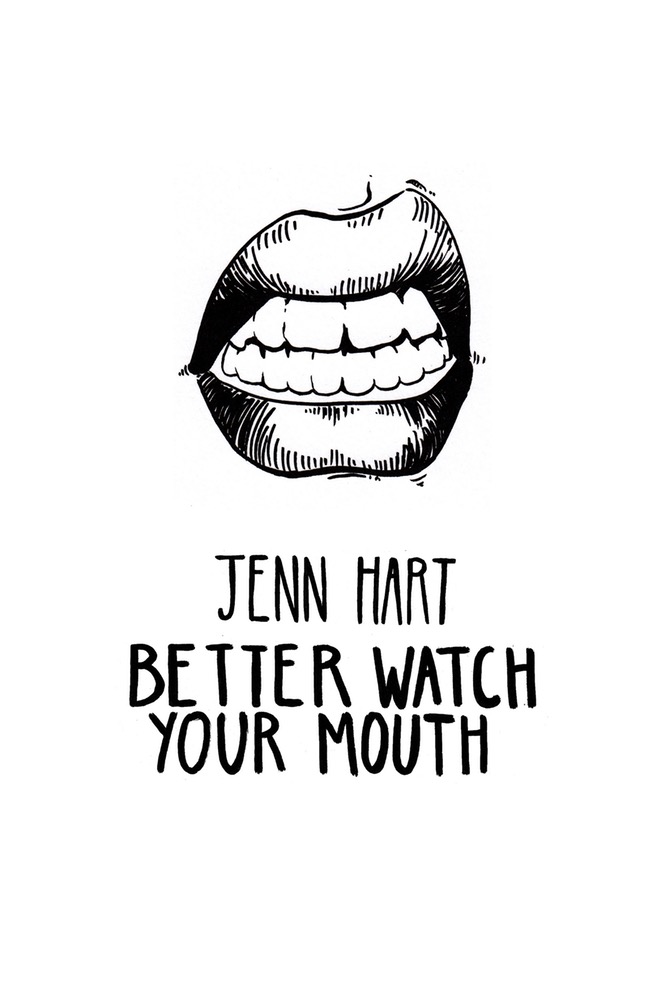
20.17 Blog #14: Better Watch Your Mouth

A few years ago, I did a tour with Jenn Hart, and we bonded over our love for Gravity Falls, Martha (she’s mostly bones) and radical left-wing politics.  She has a new collection out with Burning Eye Books, and I’ll repeat here what I said for the blurb:  “Jenn hart’s poetry is like a ferret.  It can be your best friend, or bite your face off.”

Jenn’s said she wanted her collection to be called ‘Urgh Men’ in reference to Jenn’s dedication to feminism.  Jenn is one of the fieriest people you could meet when it comes to women’s rights and representation.  She’s written highly important poetry in the form of Let Loose, Lucy and put on great gigs and events in Bristol.  So Jenn’s crusade against sexism would make ‘Urgh Men’ a fitting title for this collection.

But there is so much more to this collection than a men-hating agenda (though don’t worry, there’s plenty of righteousness).  Jenn’s poetry is defined by her own autobiographical experiences, and not the outside influence of dickhead men.

Jenn’s collection is her most revealing assortment of poems.  It’s poetry that goes beyond the surface and deep into Jenn’s history, world and personality.  Few poets allow themselves to be so open and human in this world of high-energy slam-style spoken word, stand-up gag poems or easy Things Are Bad rhetoric.  Jenn’s collection is refreshingly…Jenn.


The collection is a series of landscapes which make up Jenn’s world of women’s voices and experiences.  Adelaide Adams is a rolling account of smells, tastes and places, from whiskey to Balham, from cough tonic to the Pharmacy.  You can feel the sawdust in her hair.  So too does Lydia Bennet’s Cottage, a character from Pride & Prejudice, conjure beautiful and sad images of moth balls, chamber pots, geraniums and the plum tree.  There’s a sweet melancholy to these poems, Life At The Manor tells of Jenn’s dysfunctional family of housemates and when that friendship starts to break down.

If Life At The Manor is an sad account of the last year or two of Jenn’s life, 83A Gordon Avenue, Circa 2009 is a powerful anecdote of friendship, a warm piece about adulthood.  04/07/2008 is the exact opposite, a cold meeting between Jenn and a man who is right resigned firmly in her past.

Coral Roads is the perfect end to the collect and a perfect summery:  “I am terrified of being impressed with someone else’s lifetime as they help me cross the road.”  It’s here you realise all her pieces are about friendship, from the fictional characters of her precious novels, to the people in her past, the people in her present.

As a fellow punk poet, it’s easy to understand punk through the male prism of John Cooper Clarke and Attila The Stockbroker.  The easy rhymes, simple politics and scattergun delivery.   But here Jenn is proving that punk also means being honest and open.  Autobiographical.  Raw.

This collection is a magnificent patchwork of people, voices, places and emotions.  Funnily enough, it’s the smells, textures and tastes that really stand-out.  When you read this book (ideally before bed with a cup of camomile tea) you can breathe in this world, all neatly stacked in 31 pages.


Sunday, 2 April 2017

20.17 Blog #9: 6 Things I Learnt From Vandal Raptor

6 THINGS I LEARNT FROM VANDAL RAPTOR

So this week I presented my solo show, Whatever Happened To Vandal Raptor, at York Theatre Royal.  The show’s been in the works for a year, and I’m incredibly proud of the final product.  My first ever solo show which doesn’t just exist as a set of poems, but a full narrative story.  First show with entirely new material.  Far from extinct, VR will have a life beyond the walls of YTR’s Studio.

But, because this is the Internet, I have borrowed from Buzzfeed to neatly summarise some of the lessons learnt from this process, production and pretending to be a dinosaur.

You Can’t Prepare Enough

Like a clock ticking down until a detonation, I was very much aware once we hit the rehearsal process there would be little time for my other projects.  This meant my podcast didn’t have a new update for a while, but it also meant I got all my sessions for the Youth Theatre groups I run written up in good time.  We did a Big Shop of food.  As a freelancer, you often have the luxury of dictating your own timetable, but in this instance your timetable dictates you.

DIY lesson:  When you have no manager, you have to make sure your time is manageable.

The Writer Is Not The Editor

It’s hard for me to think of a poem as finished.  Partly because I enjoy tweaking for specific audiences, updating references or changing due to changing attitudes.  I also enjoy adding spicy spontaneity.  But many times during the process, I wanted to change lines, sometimes for the best to make something clearer, often because I worried about the meaning of the scene.  But there’s got to a be a point where the show is the show because the script is the script.

DIY lesson:  Just because you have the ownership over the script doesn’t mean you can control the script.

I Get By With A Little Help From My Friends

A solo show doesn’t necessarily mean you work alone.  A running gag has been the fact I’m an Only Child, and I don’t like sharing.  But I can’t express how much I love the bunch of people that offered their support.  Simon Bolly and Emily Rowan of Flora Greysteel for their advice on loop pedals, Jonny Gill for lending me equipment, John Holt Roberts for giving me some much-needed guitar lessons, for Hannah Davies, Dave Jarman and Jack Dean for coming into the rehearsals and watching a run.  To all the folks at York Theatre Royal, especially Juliet Forster, for their support.  For everyone that shared on social media, that came and everyone that couldn’t make it but wished me all their best.  Although, as an only child, I’m totally not prepared to share my toys, I would like to share my undying, eternal, unyielding and unending gratitude and hope I can return the favour somehow.

DIY lesson:  Punk is not, as Mr Lydon seems to think, about pissing people off.  It’s about building community.

Advertising your Marketing and Market your Adverts

I never studied publicity, I have just learnt it from doing gigs and events over the years, and I’ve far from perfected it.  My Facebook page has over 900 Likes, and the event I co-run, Say Owt, often sells between 60-90 tickets.  We plugged the show through these networks.  We had a feature in York Press, were in the York Lit Fest programme as well as the York Theatre Royal brochure.  We exit flyered punk shows, Josie Long and other York Lit events.  We didn’t get terrible audiences, but we could have done with more.  Was it the price (standard for theatre, not so much for poetry/music).  Was it the blurb?  Was it just too niche?  Things to think about.

DIY lesson:  It’s easy to be stuck inside your own world of punk, protest and dinosaurs, but you still need to make that madcap world accessible.

No Gods, No Masters, Yes To Quatermasters

On this project I worked with director Natalie Quatermass.  There’s no way in the 7 Hells that this show would even exist without Natalie’s ability to keep the cast on track (me) but also make sure the subject matter (kinda me) was heartfelt, well-paced, dynamic and had the true spirit of vital story-telling.  Natalie’s passion for making a strong, exiting piece of theatre is at the heart of this production.


DIY lesson:  Make work with your mates.


Saturday, 25 February 2017

20.17 Blog #8: Are Millennials Owed A Living? Of course we are / of course we are

I was re-reading the classic Dick Hebdige’s Subculture: The Meaning Of Style.  The book was one of the first to academically and intelligently examine, explore and research pop and rock music as a social movement.  It’s right up my street.

The book is from 1979 but I’d like to draw some sections from part 6 (the unnatural break).
When a subculture first explodes into newsdesks, the mainstream often react with alarmist language with fluctuates between “dread and fascination, outrage and amusement”.  As a subculture begins to “strike its own eminently marketable pose” it becomes more recognisably familiar.  To this extent, it ceases to be the shocking and the mainstream will attempt to do two traps:

1.  It will absorb and manage the art, fashion, ideas and conventions of the sub-culture for mass-marketable and mass-produced commodification.  Bands will be offered lucrative, but restrictive, record deals.  Fashion will be copied and cloned.  Ideas will be watered down and liberally generalised.

2.  It will be re-defined as deviant behaviour by power structures, e.g. the church, the law, the media, the politicians.  Whatever the subculture stands for will be dismissed or reimaged to suit the narrative enforced by dominant groups.

Obviously Hebdige saw this happen within years of punk rock’s first explosion in 1976.  The first trap has been used countless times to adapt punk, from The Clash’s signing to CBS to the commercialisation of raves in the 90s to the landfill emo and indie bands of the 00s.

The second one is more interesting in the status quo’s attempt to transform punk into an object, including the people involved in the subculture.  Quoting Roland Barthes, Hebdige suggests that punk becomes a spectacle, a clown.  The punks become “dangerous aliens and boisterous kids, wild animals and wayward pets.”  Clearly some punk bands would flaunt this tag with pride, but others would be frustrated their message, ideas and art is treated as an othering oddity. 

As much as many punks (perhaps Joy Division, The Adicts, PiL, The Slits, The Damned, Siouxise & The Banshees) would love to be seen as something inhuman, or a twisted glorious pastiche of humanity (being the “poison in the human machine”), others more connected with a solid political message or class identity would struggle with this lack of autonomy (The Clash, Stiff Little Fingers, The Redskins and the subsequent Oi! waves).

To this extent, Hebdige cites numerous articles in the media where punk becomes a silly pastime, a hobby related to fancy dress and being a silly phase.  Punk has its teeth filed down.  The Enemy has been tamed.

The punk scene at the moment holds no major threat to the mainstream, either cultural or musical.  It’s content to sit inside its own scenes and venues.  The music being made is superb and strong, the communities supportive and the fire no less hotter than ever before.  However ambition is more about living a life of album-to-album and festival-to-festival.  Rather than a gauntlet to the mainstream music world, it’s a solid alternative proving we don’t need Radio 1 or NME, we just need a PA and some mates.  Political, bands are still dedicated to causes and activism, the two blurring into one another in both lyrics and direct action.  Whilst the emo genre is still toyed around as a commercial plaything (see Trap 1) after 40 years, punk has been able to shrug off the redefinitions of silliness or clowning, or rather embrace them and reclaim them in many respects.

But I can’t help but think about my generation of Millennials, those born roughly between 1980-1995 and came of age around 2000, old enough to remember a pre-digital age (and therefore not necessarily a digital native) but young enough to embrace and direct the course of new technologies.
Millennials tend to be vilified by the older generations as a self-serving, expectant and over-privileged generation who presume to be handed the world on a silver plate.  In addition, our fashion and music are dismissed as ‘hipster’ and entirely style over substance.

Let’s look at 2010, when mostly young people stormed Milbank, the headquarters of the Conservative party, and proudly kicked off a wave of resistance against Tory austerity measures which persists to this day.  Before traditional Unions, it was a student-orientated core which opposed Con-Dem policies in marches, occupations and agitation.  For this, the media tended to use Trap 2. 

“Militants from far-Left groups whipped up a mix of middle-class students and younger college and school pupils into a frenzy.”- Daily Mail.  The tag “trouble-makers” is used several times.

Protest from the younger generations was portrayed as savage, dangerous, immoral and barbaric.  The Con-Dems were the face of reason and order, the younger generations a snarling mass.

And yet, this is a romantic vision that has been changed somewhat in recent years.  Rathe than militant threats, the younger generations of Millennials have been made the clowns of the 21st century.

Google’s suggestions for ‘Millennials are…’ comes up with ‘the worst’ and ‘screwed’.  Time called us the Me Me Me Generation, self-ish but also lonely.  Unable to network, compromise or adapt we have expectations of success.  Simon Sink’s video suggests that we Millennials feel owed, and for that we are stupid, pompous and the object of derision.

Google image search shows Millennials are selfie-obsessed narcissists, clutching to technology both literally and figuratively.  Shallow, self-absorbed and dedicated to perfection.

Millennials are not a subculture, we are a broad range of ages, classes and geographical dynamics.  But all the same, I see the same treatment of mods and punks used by the media to present us as infantile.

As Crass sang in 1978, a year before the publication of Subculture: The Meaning Of Style:

The living that is owed to me I'm never going to get,
They've buggered this old world up, up to their necks in dept.
They'd give you a lobotomy for something you ain't done,
They'll make you an epitomy of everything that's wrong.
Do they owe us a living?  Of course they fucking do


 They built a world of housing, healthcare and education in a few short years they whipped it away.  Gentrification smashed apart affordable housing, the NHS has been ransacked by Tory policy for its supporters in the vile private sector and when we made a challenge was made to the raising of Tuition Fees we were Vandals Without A Cause.

And yet, we are the “epitomy of everything that's wrong.”  The rioter and the vandal and the looter.  The trendy liberal corporate-ish hippie-ish hipster so removed from reality it’s sickening.  Get a job.  Get a proper job.  Get a proper haircut.  Get a grip on reality.  Blah blah blah.

So what is the solution?  Well stop sharing anti-Millennial memes and videos for a start. 
The Milllennial they portray is a constructed myth.


Barthes says “myth can always, as a last resort, signify the resistance which is brought to bear against it.”


Tuesday, 13 December 2016

20.16 Blog #30: Blogs and bands, poems and young people


My phone must have crashed, or ran out of memory, or decided to rewrite history, because the calendar has lost all the details from the past year.  It’s quite scary how I have to now rely on my memory to note what has happened this year.

I slap my posters on my wall from every event I put on, so thankfully I have some record in the form of paper and bluetack

SAY OWT SLAM
We hit 13 slams and 2 years running of Say Owt Slam.  We kicked off with the very unique and honest poet Sally Jenkinson, followed by a feast of poets, Rose Drew, Lily Luty, Marina Poppa, Adele Hampton and headliner Sophia Walker  for International Women's Festival.  A little later we ran an Anti-Slam, this beautifully bizarre new concept of worst poet wins championed by Dan Simpson and Paula Varjack.  Our Clash of Champions, guested by Jack Dean, was won by Ian Winter.  After popping over to Edinburgh Fringe, we then returned with a spate of slams with Scott Tyrrell, Vanessa Kisuule and finally Rob Auton.  We also ran a couple of open mics hosted by Chris Singleton and Gen Walsh.  And that's not to mention all the wonderful slammers that came and cracked out words, and the amazing audiences who constantly bring the energy to make the nights so intense, but friendly. It’s hard to get a handle for me, I see behind-the-scenes, in front-of-the-scenes and the script-for-the-scenes so it all becomes very day-to-day for me.  But I know much the nights matter to people, and I always appreciate the feedback, the support, the love from the York scene, travelling poets, the guests and Apples & Snakes.  We have BIG plans for 2017, and started recording a Podcast now on iTunes, so I’d say Say Owt is the most visibly one of the big hits of 2016.  Thanks to everyone x


UP THE NERD PUNKS 2
Sequels are always difficult, and I made a laborious joke of this in my second show at EdFringe in 2 years.  I’ll admit, I wanted to spend more time writing and making the show, and the theme became something slightly different to my initial concept.  But I did really enjoy running the show, and always appreciate the spoken word community at EdFringe greatly.  It’s always a learning curve, and never take for granted what it means to be part of that world.  I did manage to get some new poems out of the show which have stood the test of time, namely I’m Sorry I Missed Your Gig and Discount Tescos Bunting, the latter now on YouTube.  Will Up The Nerd Punks 3 make an appearance in 2017?  Stay tuned, true believers…

YOUTH THEATRE
The year began with Hull Truck Youth Theatre putting on my adaptation of Kafka’s The Castle, which I won’t lie:  was a tricky creature to pin down.  As I’m sure any Kafka fan will confer.  But I’m really proud of the final piece, and the production was a great tangled ensemble of characters and I think a modern day (and troubling perspective) on work.  I directed a Play In A Week for the Lawrence Batly Theatre, one based around conscientious objectors of WW1 and the other wizards and spells (slightly different themes I'll admit...). I also wrote a short adaptation of The Emperor’s New Clothes for Harrogate Youth Theatre, but mainly I’m proud to have been doing more facilitation in general for Lawrence Batley Youth Theatre, Harrogate Theatre and York Theatre Royal and worked with their Youth Theatre groups.  Thanks everyone x


GIGS
I kicked off 2016 by putting on an all-dayer of bands for MooseFest.  We did one more Moose gig with Captain Chaos before my parenter-in-gigs ducked out to focus on work.  So I’ve been doing more gigs as Pewter Promotions with feminist queer indie-punk, like Colour Me Wednesday, Ay Carmela, The Tuts, Fairweather Band, Jesus & His Judgemental Father and Jake & The Jellyfish and a whole number of ace supports.  It's important for me to learn about gig promotion and Doing It Right, and not overloading myself.  But what I think is essential is I put on bands I want to see, else it becomes a favour, not a fun experience.  Thanks everyone x


WRITING POEMS
I decided at the start of the year I would write loads of new poems.  That didn’t quite happen how I’d like.  I have this constantly worry I need ‘this kind of poem’.  The funny one to open with.  The anti-racist one.  The one that changes everyone’s minds.  But I have written some poems for Up The Nerd Punks 2 which are now part of my set, and have been working on some in the lying light for December.  I think it’s not always useful to assume you’ll write loads of new stuff just because you say you’ll write a load of new stuff.  So before I go to bed I’ve been writing for 1-2 mins at least.  Just scribbles.  Thoughts.  We’ll see what 2017 holds.

OTHER STUFF
My band put out an EP!  I performed started scratching a new show for 2017!  I spoke at the Art of Punk Conference at the University of Northampton!  I spoke at the Third Angel Symposium at Leeds!  We continued making monthly nerdy quizzes and it's been a mega fun time, I assure you!  Thanks everyone x

I've also been pretty down at times, filled with the usual anxiety and General Blues of 21st century life.  But thanks for all my friends who stick with me, and I'm sorry to those I don't give enough time to, or have let down.

Thanks everyone x Sorry everyone x

Love, solidarity and rage x


Tuesday, 6 December 2016

20.16 Blog #28: Albums of 2016

Henry’s albums of the year

So 2016 has been and is almost gone, and as usual I have a number of albums and EPs spinning on my antique 2009 iPod.  In fact, quite a lot.  Thematically, the majority are indie-pop/punk with a strong queer undercurrent.  I think this reflects the gigs and scenes I’ve been hanging out with.  

Sometimes you might assume the indie-pop/punk tunes below are descendents of the landfill indie of the late 00s.  These were mostly laddish bands doing anthemtic choruses, this new wave are more inclusive, political, DIY and lyrically inventive.

PETROL GIRLS:  TALK OF VIOLENCE
Something I love about following a band is how their catalogue of music expands.  A couple of years ago, all I had were 3 Petrol Girls songs that spun around on my repeat in my ear.  2015 I managed to put them on not once, but twice.  Now 2016 bequeathed us the Some Thing EP and their debut album Talk of Violence and I am consistently inspired by the band’s commitment to inter-sectionality.  Positioned as a feminist post-hardcore band, Petrol Girls also champion LBGTQ+ and refugee/immigration causes.  The album itself feels beautifully raw and captures their live performance, but for me whenever I listen to it I am reminded there’s a world of activism out there that isn’t going to get restful anytime soon.


MARTHA:  BLISTERS IN THE PIT OF MY HEART
Martha’s debut album was easily my favourite album of 2014, and probably one of my favourite bands.  Initially this album felt a little less raw than their first, but over time I realised instead of offered a more playful introspective approach to song-writing that probably make better earworms in the long run.  The album is a little more funky, a little more pop, a little funnier and friendlier than their s/t album, and the jangly upbeat tempo makes me return to the ‘M’ section of my iPod.  There's a lot of intelligent lyrics, well-crafted song-structure and a variety of tempos that it makes the album feel very special and so easy to listen to over and over and always discover something fun or unique in each song.  It always makes me re-think lyrics as poetry and stories but still with a punk and pop edge.


MUNCIE GIRLS:  FROM CAPLAN TO BELIZE
A band I’d heard a lot about, the album can feel incredibly smooth with a recurring undercurrent of politics, feminism, home, family and has a real strength that, if I’m honest, surprised me.  The band manage to capture a great turn of phrase, hook and definitely feels like a full repeatable album than a handful of catchy songs.  The band’s lyrics have real story-telling potential and Lande’s vocals draw you in alongside the music.  This was a toss-up between Happy Accident’s album (see below) simply because genre and scene-wise they share a lot, but I think I’m going for Muncie Girls because I already knew I was a big Happy Accidents fan thanks to their earlier furious madcap high energy EP (and their debut album is just as pumped), but this album was a refreshing discovery.


Lovetown for the Dovetown (DANIEL VERSUS THE WORLD, AY CARMELA, COLOUR ME WEDNESDAY, THE TUTS)
To lump all these albums together is a CRIME, especially as they all have their own unique charm.  Colour Me Wednesday’s EP is another slice of their clever pop lyricism, Ay Carmela treads the line nicely between heartfelt story-telling and sharp punk, The Tuts’ Update Your Brain is pretty much the perfect vehicle for their engaging and finely crafted live performance and Daniel Versus The World’s queer piano-punk music is as sad as it is angry, as powerful as it is delicate.  However the recurring themes of queer identity, feminism, friendship, home, DIY, anger and love, individuality and community have made the Dovetown collective mainstays of my listening life (and this way I get to include all them in my top 5).  Also, the fact the collective all play in each other's bands, and are essentially a family, means I hope they don't mind rocking up as single supportive gang as they so often do at gigs.


SONIC BOOM SIX:  THE F-BOMB
This album sneaks into the top 5, not because it’s not been well-played on my iPod but because actually I’m not as into ska-punk as I once was back in t’day.  But I will always return to SB6 as a band that excite me.  Not your run-of-the-mill ska-punk fusion, this album packs all the playfulness with rap and electronic music to keep apace of the scene.  Whilst the fury of out-and-out political lyrics might be the SB6 of the past, what the band still do incredibly well is tell stories of (usually female) characters, and has a direct message to stand up for yourself as a person, an individual, as power in your own right.  They have a great commitment to making something fresh, and in a world of indie-pop I was grateful, and excited by, these bangers.


Notable mentions:  Happy Accidents (You Might Be Right), Pokémon Liberation Army (TM101), OPS (Sluice Around), Chris T-T (9 Green Songs), The Julie Ruin (Hit Reset), The Fairweather Band (Meow), Harry & Chris (Simple Times)


Shout outs to:  Viva Zapata (Fuck It, It’ll Be Fine), The Potentials (We Are The Potentials), Doe (Some Things Last Longer Than You), KINKY (Sissy Mosh), Skull Puppies (Endless Dungeon Crawl), Camp Shy (Camp Shy), ROMP (Departure From Venus), The Coathangers (Nosebleed Weekend), Savages (Adore Life), Dream Nails (DIY), Tough Tits (Hairless), Austeros (Painted Blue), Pup (The Dream Is Over), Syslak (Syslak EP), Shit Present (Misery + Disaster), Dan Kemp (Holding Down)


Also my band made an EP.  Pewter City Punks (Glass Type EP)